


Pick the wrong plastic, and a bobbin can crack, soften, or catch fire. That can happen before the transformer around it ever fails on its own. That’s not rare. It’s the predictable result of matching the wrong material to the wrong job.
Plastic transformer bobbins secure copper windings. They add electrical insulation. They support safe, reliable operation. The material behind that job matters as much as the design itself. Some plastics handle extreme heat with ease. Others cost less but soak up moisture over time. Picking right means matching real properties to your real conditions. It’s not about grabbing whatever’s cheapest on the spec sheet.
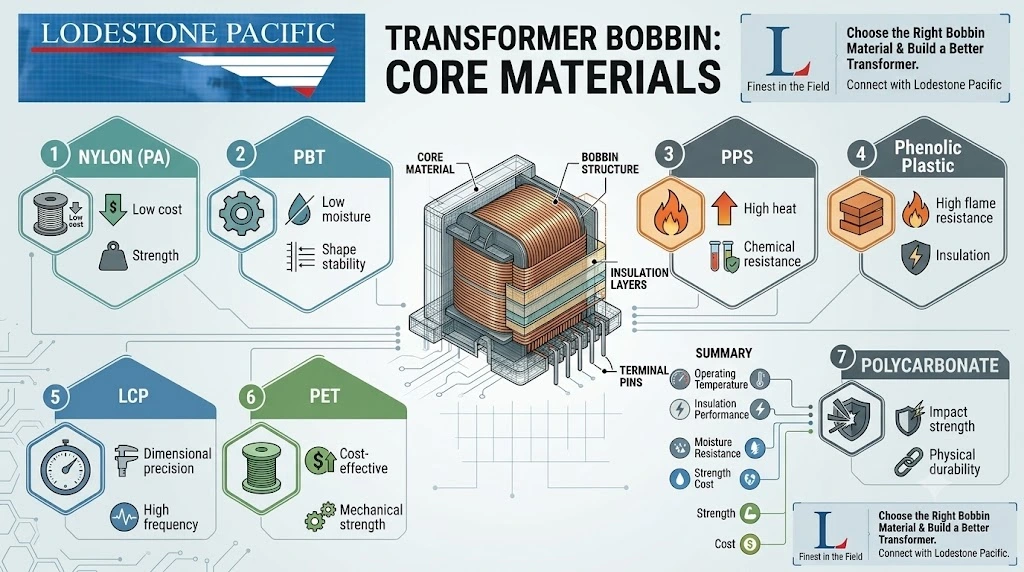
Lodestone Pacific builds a wide range of high-performance plastic transformer bobbins. Custom magnetic component solutions round out the lineup, across industries. Here are the seven materials engineers reach for most, and why each one earns its spot.
Seven Materials at a Glance
| Material | Standout Strength | Best For |
| Nylon (PA) | Low cost, easy to mold | Power supplies, consumer electronics |
| PBT | Heat resistance, shape stability | Automotive, industrial systems |
| PPS | Extreme heat and chemical resistance | Aerospace, harsh environments |
| Phenolic | Flame resistance, strong insulation | Industrial transformers |
| LCP | High precision, low moisture uptake | High-frequency, compact electronics |
| PET | Reliable insulation, low cost | Consumer electronics, low-power builds |
| Polycarbonate | Impact resistance, durability | Systems under physical stress |
1. Nylon (PA)
Nylon shows up often in bobbin builds. Low cost and real strength explain why.
What Nylon Gets Right
- Good strength.
- Good insulation.
- Low cost.
- Easy to mold.
Where It Works Best: Nylon shows up often in power supplies and consumer electronics.
The tradeoff is real, though. Nylon tends to soak up moisture over time. Even so, it stays in heavy use. It’s cheap. It’s dependable. It fits most common designs without issue.
2. PBT (Polybutylene Terephthalate)
PBT is another widely used plastic for bobbins.
What PBT Gets Right
- Good heat resistance.
- Strong insulation.
- Low moisture pickup.
- Good shape stability.
Where It Works Best: Automotive electronics and industrial systems both lean on PBT.
This material holds up well anywhere long-term output matters. Engineers reach for it often, thanks to its heat and stress resistance.
3. PPS (Polyphenylene Sulfide)
PPS handles tough jobs well. Real heat resistance backs that up.
What PPS Gets Right
- High heat resistance.
- Strong chemical resistance.
- Good strength.
- Long product life.
Where It Works Best: PPS shows up in automotive systems, aerospace gear, and industrial electronics.
PPS costs a bit more than some options. It earns that premium, though, in reliability. Products that need to perform under extreme conditions lean on it heavily.
4. Phenolic Plastic
Phenolic has been part of bobbin manufacturing for decades. Strong insulation and real flame resistance explain why it stuck around.
What Phenolic Gets Right
- Good insulation.
- Heat resistance.
- Strong support.
- Flame resistance.
Where It Works Best: Phenolic shows up in industrial builds and older power supply systems.
The material can grow brittle over time. That’s a real downside. Even so, plenty of makers still reach for it, thanks to its strong insulation.
Curious which material fits your specific application? Contact Lodestone Pacific’s engineering team. They’ll talk through your real conditions before you commit to a material.
5. LCP (Liquid Crystal Polymer)
LCP is a high-end plastic. It shows up often in advanced electronic designs.
What LCP Gets Right
- High precision.
- Low moisture pickup.
- Good heat resistance.
- Strong electrical output.
Where It Works Best: LCP shows up in high-frequency builds and compact electronics.
This material suits small parts that need tight precision. Products needing that level of accuracy lean on LCP for exactly that reason.
6. PET (Polyethylene Terephthalate)
PET delivers good strength and reliable insulation at a lower price.
What PET Gets Right
- Good strength.
- Reliable insulation.
- Lower cost.
- Good stability.
Where It Works Best: PET shows up widely in consumer electronics and low-power builds.
PET can’t match PPS or LCP under extreme heat. For everyday products, though, it still holds up well.
7. Polycarbonate (PC)
Polycarbonate stands out for one thing above all: real impact resistance.
What Polycarbonate Gets Right
- Strong impact resistance.
- Good insulation.
- Strong support.
- Durable build.
Where It Works Best: Industrial systems and parts under physical stress both lean on it.
It’s weaker under extreme heat, though. This material fits best where toughness matters more than raw heat resistance.
Why Fire Safety Ratings Matter Just as Much
Heat resistance gets most of the attention. Fire safety deserves equal weight. That’s especially true for parts sitting close to live circuits.
That’s exactly what UL 94 measures. It’s the standard flame test for plastics used in electronics. UL, or Underwriters Laboratories, publishes it. Materials get tested and sorted by how they respond to direct flame. Key factors include whether they self-extinguish and how fast. Whether burning drips fall and ignite anything below matters too.
| UL 94 Rating | What It Means |
| HB | Slow horizontal burn, the lowest rating |
| V-2 | Self-extinguishes within 30 seconds, drips allowed |
| V-1 | Self-extinguishes within 30 seconds, no flaming drips |
| V-0 | Self-extinguishes within 10 seconds, no flaming drips |
| 5VA / 5VB | Toughest tests, larger flame, used for enclosures |
Phenolic’s real flame resistance is exactly why it’s stuck around for decades. According to UL’s own technical page on combustion testing for plastics, a V-0 rating is often required. That’s true for parts near power circuitry. That’s a real spec worth checking. It’s not a footnote. A material that handles heat well can still fail a flame test. That makes it unsafe for some spots inside a design.
Why Material Choice Matters
Choosing the right material shapes safety, performance, and long-term reliability all at once.
The wrong pick can lead to real problems:
- Heat damage.
- Cracking.
- Weak insulation.
- Electrical failure.
- Shorter product life.
The right pick delivers the opposite, across the board:
- Better product reliability.
- Real heat resistance.
- Strong electrical insulation.
- Solid mechanical strength.
Weigh the actual work environment before you lock in a choice.
Not sure which of these seven fits your build? Browse Lodestone Pacific’s bobbin and hardware options to compare real specs by platform.
Key Factors to Weigh
A handful of factors deserve real attention when picking a material.
- Heat. High-heat jobs often call for PPS or LCP specifically.
- Insulation. Strong insulation improves both safety and output.
- Moisture. Humid settings favor materials with low water pickup.
- Strength. Bigger builds or vibrating systems need tougher materials.
- Cost. Higher-end materials cost more. Budget and technical needs both matter here.
Engineers weigh these choices against both real performance needs and real project cost.
Why Engineers Choose Lodestone Pacific
Lodestone Pacific supplies magnetic component solutions and high-performance bobbins. This reaches numerous industries.
Customers benefit from:
- Quality materials.
- Custom molding support.
- Reliable manufacturing.
- Engineering help.
- Competitive pricing.
- Global supply support.
That real track record helps engineers land on solid solutions. This holds true for common projects and unusual challenges alike.
Select the Right Material, Build a Better Transformer
Plastic transformer bobbins play a key role. They shape insulation, support, and overall output. The right material choice genuinely improves durability, strength, and heat resistance.
Nylon, PBT, PPS, phenolic, LCP, PET, and polycarbonate each bring different strengths. None wins every category. Matching a material to your real job is what makes a design hold up. That matters more than its price tag alone.
Looking for high-performance plastic transformer bobbins, or a custom magnetic component solution? Connect with Lodestone Pacific’s team today. Discuss your project and request a quote for your next build.
Frequently Asked Questions
- What are plastic transformer bobbins used for?
They hold copper wire windings inside a transformer. They add insulation and support the winding too. Overall safety improves as a result.
- Which material is best for high-temperature transformer bobbins?
PPS and LCP are common picks for high-heat builds. Both offer strong heat resistance. Both also last a long time.
- Why does material selection matter so much for transformer bobbins?
Material affects heat resistance, insulation, strength, and durability, all at once. The right pick improves both output and safety directly.
- Can Lodestone Pacific provide custom transformer bobbins?
Yes. Lodestone Pacific offers custom molding and engineering support. This gets built around special project needs.
- What industries use plastic transformer bobbins?
Common ones include automotive electronics, industrial gear, and power supplies. Medical devices, telecom, and consumer electronics use them too.
- What does a UL 94 flammability rating actually tell me?
It shows how a plastic responds to direct flame. That includes how fast it self-extinguishes. V-0 is the toughest common rating. It’s often required near power circuitry.